
Gjirokaster – Stone City
Gjirokaster at a Glance
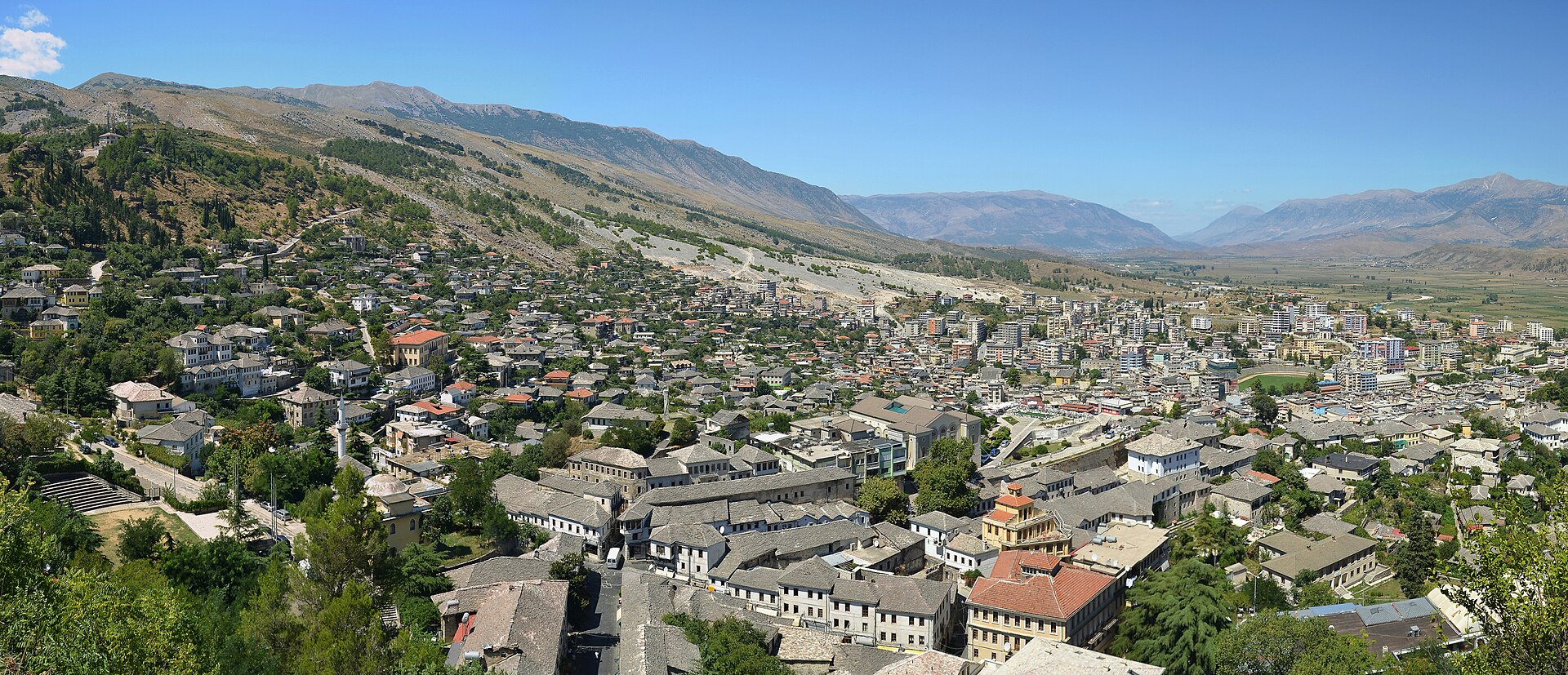
| Setting | Steep hillside above the Drino Valley |
| Known for | Stone-roofed Ottoman town and UNESCO World Heritage setting |
| Landmark | Gjirokaster Castle and the Old Bazaar |
| Best time | May–June and September–October |
| Recommended stay | 1–2 days |
Why Visit
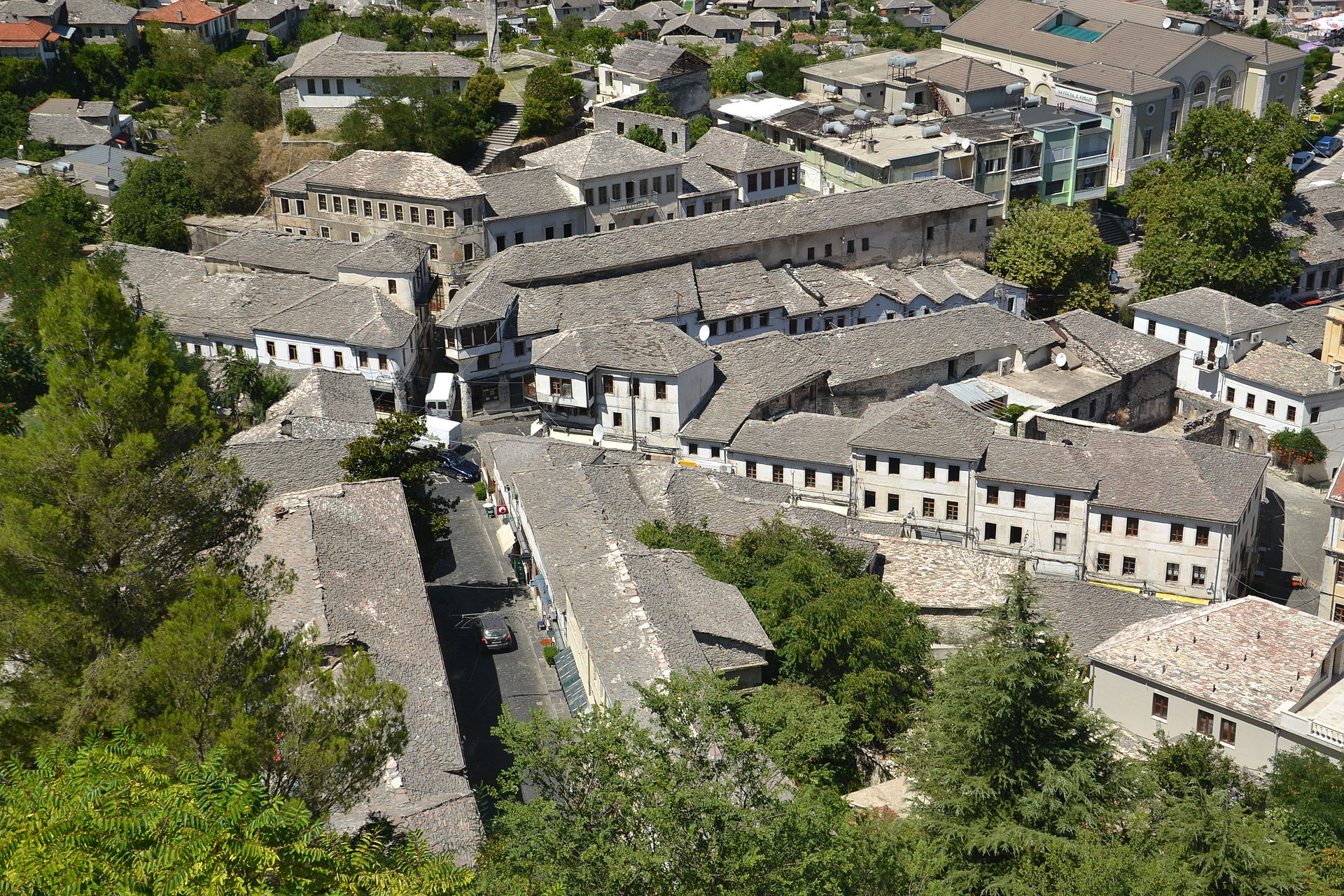
Gjirokaster brings together a hilltop castle, stone-roofed houses, cobbled streets, and the Old Bazaar above the Drino Valley. The page also connects the town’s history with Ismail Kadare, the Cold War Tunnel, and nearby Blue Eye Spring.
Accessibility
- The page describes steep streets and a hillside setting, so break the visit into shorter uphill and downhill sections.
- Cobblestones, castle approaches, and the Cold War Tunnel involve different surfaces and interior conditions; confirm suitability for your needs before committing to each stop.
- Keep a slower alternative in the plan, such as the bazaar and valley viewpoints, if the steepest sections are not comfortable.
Common Mistakes
- Treating the castle, bazaar, and lower streets as one flat walking area.
- Skipping the Cold War Tunnel when the town’s twentieth-century history is a main interest.
- Planning only the central landmarks and leaving no time for the Drino Valley outlooks or the town’s literary context.
- Assuming every historic interior has the same surface, stairs, or lighting conditions.
Photography
Stone roofs, castle walls, the Old Bazaar, and Drino Valley viewpoints give this hillside town several distinct compositions. Photograph respectfully around homes, museums, and working shops. Albania regulates drones — check current registration and flight rules with the Civil Aviation Authority of Albania before flying.
Etiquette
- Treat the old town as a lived-in neighbourhood, not just a backdrop.
- Ask before photographing residents, shop interiors, or people at close range.
- Follow posted museum, tunnel, and religious-site instructions.
Frequently Asked Questions
When is the best time to visit Gjirokaster?
May–June and September–October are best, with temperatures of 20–30°C (68–86°F) and clear skies. Spring brings wildflowers to the Drino Valley, while autumn offers golden light on the stone roofs. July–August is hot but manageable — the stone houses stay cool. Winter is cold and wet (4–12°C) but the mountains are often dusted with snow, creating dramatic views. The Gjirokaster National Folklore Festival, held every 5 years (next in 2027), is a major cultural event.
How do I get to Gjirokaster?
Gjirokaster is 3 hours by bus from Tirana (€8–10) and 1 hour from Saranda (€4–5). Buses and furgons arrive at the main terminal at the bottom of the hill — the old town is a steep 20-minute uphill walk. The nearest airport is Ioannina in Greece (1.5 hours away) if you're coming from the south. By car, the SH4 highway from Tirana is in excellent condition.
How many days do you need in Gjirokaster?
1–2 days is plenty: one day for the castle (400 lek entry), the Cold War Tunnel (300 lek), and the Old Bazaar. A second day for the Ismail Kadare House Museum, the Zekate House, and a day trip to the Blue Eye spring (18 km away) or the village of Dervican for mulberry raki tasting.
What should I eat in Gjirokaster?
The local specialty is qifqi — fried herb and rice balls flavored with mint and spring onions, typically served with yogurt. Tradicional Odaja (€4–8) in the Old Bazaar serves excellent qifqi and oshaf (fig pudding). Kujtim's (€5–10) offers grilled meats and traditional home cooking. For an authentic drink, try mulberry raki (mani raki) — a sweet local spirit made from mulberries that's unique to the Gjirokaster region.
What are the top attractions in Gjirokaster?
Gjirokaster Castle (400 lek) — one of the largest in the Balkans with a weapons museum; the Cold War Tunnel (300 lek) — a 1 km underground bunker complex; the Old Bazaar; the Ismail Kadare House Museum (200 lek); the Zekate House — the finest example of Ottoman residential architecture with a massive stone tower; and the Blue Eye Spring 18 km away.
Best Things to Do in Gjirokaster
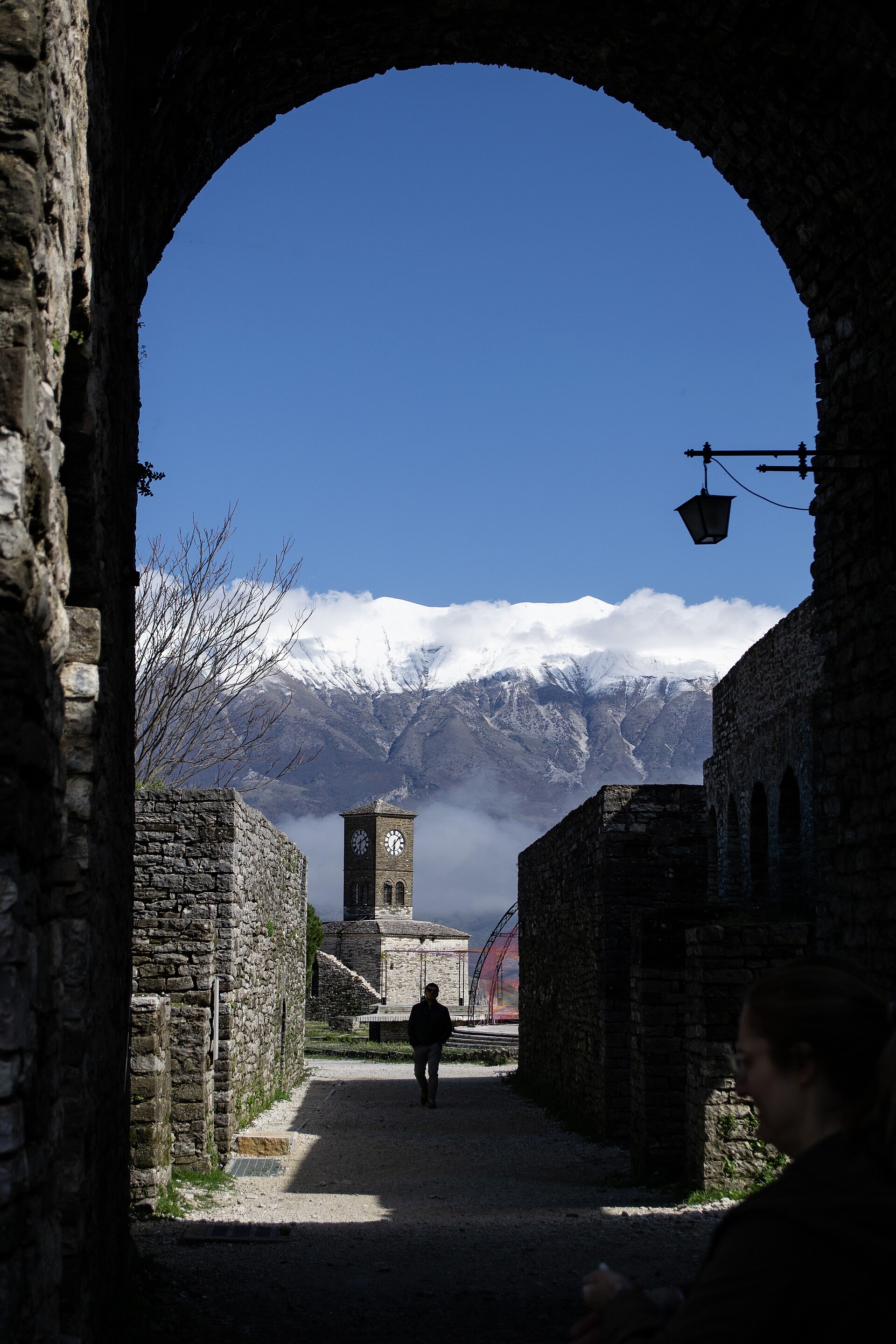
A UNESCO World Heritage site perched dramatically on a steep hillside overlooking the Drino Valley, Gjirokaster is one of the best-preserved Ottoman towns in the Balkans. Known as the City of Stone for its distinctive stone-roofed houses and cobbled streets, the town feels frozen in time. The Gjirokaster Castle (400 lek entry) dominates the skyline — it's the largest castle in Albania, stretching 600 meters along the hilltop, and now houses the Museum of Armaments featuring weapons from World War II through the Kosovo conflict, as well as a captured US Air Force jet.
Exploring Gjirokaster: Top Attractions & Hidden Gems
Beneath the castle lies the Cold War Tunnel (300 lek entry), a 1-kilometer underground bunker complex built by Enver Hoxha, complete with meeting rooms, sleeping quarters, and air filtration systems. The Old Bazaar (Pazari i Vjetër) zigzags down the hill with craft shops, antique dealers, and excellent restaurants like Tradicional Odaja (€4–8) serving qifqi — fried herb and rice balls unique to Gjirokaster — and Kujtim's (€5–10) for hearty grilled meats and traditional home cooking. Fantazia (€5–12), higher up near the castle entrance, offers panoramic valley views with its grilled lamb and fresh salads.
Local Culture & Food in Gjirokaster
The town was the birthplace of Albania's most celebrated writer, Ismail Kadare, whose childhood home is now a museum (200 lek entry), as well as communist dictator Enver Hoxha. For a true local experience, try mulberry raki (mani raki) — a sweet, fragrant spirit made from the mulberry trees that line the town's ancient streets. The nearby Blue Eye Spring (Syri i Kaltër) is just 18 kilometers away, a stunning natural pool with crystal-clear water bubbling up from over 50 meters deep. For the best experience, wander the quiet backstreets above the bazaar at dusk, when the stone roofs glow amber and the Drino Valley views stretch for miles.
🗓 Best Time to Visit
May–June and September–October are ideal, with daytime temperatures of 20–30°C (68–86°F), clear skies, and comfortable conditions for climbing the steep streets. Spring brings wildflowers to the Drino Valley floor and the hillsides are lush green. Autumn offers crisp air and golden light that makes the stone roofs of the old town glow. July–August is hot (often above 35°C) but manageable because the thick stone walls of the Ottoman houses keep interiors cool — plan your uphill explorations for early morning or late afternoon. Winter (November–March) is cold and rainy with temperatures of 4–12°C, and some restaurants in the bazaar close for the season, but you'll have the castle and streets almost to yourself. The Gjirokaster National Folklore Festival, held every five years (next in 2027), transforms the castle into a stage for traditional Albanian music and dance — plan well ahead if you want to attend.
🍽 Food & Drink
Gjirokaster's cuisine is distinct from the rest of Albania, shaped by its mountain location and Ottoman heritage. The signature dish is qifqi — rice balls mixed with fresh mint, spring onions, and herbs, then deep-fried until golden and served with a garlic yogurt dip. Tradicional Odaja (€4–8) in the Old Bazaar is the go-to spot for qifqi, as well as oshaf (sweet fig pudding). Kujtim's (€5–10), a local institution near the mosque, serves huge portions of grilled meats — the lamb chops and mixed grill platter are favorites — along with homemade bread baked in a wood-fired oven. Fantazia (€5–12), perched near the castle entrance, offers the best valley views and specializes in slow-cooked lamb and vegetable casseroles. The local drink specialty is mulberry raki (mani raki), made from the black mulberries that grow everywhere in Gjirokaster — it's sweeter and smoother than grape raki, with a deep berry flavor. You'll find it in every restaurant and bars, often offered as a complimentary digestif after your meal. For something non-alcoholic, try the fresh pomegranate juice sold by street vendors in season. The mountainous hinterland also produces excellent goat and sheep cheeses, available at the Saturday market at the bottom of the old town.
🚗 How to Get to Gjirokaster by Bus, Car & Boat
By bus and furgon: Gjirokaster is well-connected by minibuses. From Tirana (3 hours, €8–10) buses depart regularly from the main terminal. From Saranda (1 hour, €4–5) furgons run hourly during summer — the road winds through the scenic coastal mountains. From the Greek border at Kakavia, a taxi costs €15–20 (15 minutes). By car: The SH4 highway from Tirana is excellent, and the drive takes about 3 hours via the scenic Peshkopi mountain pass. Coming from Saranda, the road twists along the coast then inland through the Drino Valley — allow 1.5 hours. Getting around: The old town is built on a very steep hill. Buses drop you at the bottom — from here it's a 20-minute uphill walk to the castle. Taxis at the bottom cost €3–5 to take you up to the castle entrance. The Old Bazaar covers the middle section, with pedestrian-only cobblestone streets. Wear comfortable walking shoes with good grip — the stone streets are very slippery when wet. For day trips (Blue Eye, Dervican village), negotiate a half-day taxi tour for €30–40.
🥘 Where to Eat in Gjirokaster: Authentic Local Cuisine
Eating in Gjirokaster is a highlight of any visit — the food is hearty, the setting is historic, and the prices are some of the lowest in Albania. Tradicional Odaja (€4–8), tucked away on a side street off the Old Bazaar, is the best place to try qifqi (€3 for a generous portion) — these herb-and-rice fritters come with a yogurt dip and a side salad. They also serve excellent oshaf (€2.50) — a warm fig pudding with cinnamon and walnuts. Kujtim's (€5–10), easily spotted by its busy terrace on the main bazaar street, is famous for its grilled lamb chops (€7), giant mixed grill platters (€10, enough for two), and homemade raki. Fantazia (€5–12), at the top of the bazaar near the castle entrance, has the best views — order the slow-cooked lamb in yogurt (€8) and a glass of local wine to watch the sunset over the valley. For budget eats, head to the bakeries in the lower bazaar where fresh byrek (€0.80–1.20) with spinach, cheese, or meat is baked throughout the day. The Saturday market at the bottom of town is excellent for fresh fruit, local honey, and cheese for self-catering. If offered a complimentary glass of mulberry raki at the end of your meal — a local tradition — always accept.
🏨 Best Hotels in Gjirokaster – Stone City
Gjirokaster's accommodation is mostly in converted Ottoman stone houses — expect thick walls, creaky wooden floors, and terraces with valley views. Hashorva Guesthouse (€20/night) is the backpacker favorite — a beautifully restored stone mansion in the old town with a vast terrace overlooking the valley, run by a welcoming family who serve an excellent breakfast of homemade jams, fresh bread, and boiled eggs. Kotoni B&B (€30/night) near the castle entrance offers comfortable rooms with Ottoman-style furnishings and a roof terrace with panoramic castle views — the owner is a wealth of local knowledge. Hotel Sopoti (€10/night) at the bottom of the hill is the budget king — basic but clean rooms with shared bathrooms, perfect for backpackers passing through. Most guesthouses are clustered in the upper old town, within 5–10 minutes' walk of the castle and bazaar. Almost all offer free breakfast and many have on-site restaurants or partnerships with local konobe. Note that parking is limited in the old town — if you're driving, ask your accommodation about drop-off access before arriving.
Find a stay in Gjirokaster
Compare apartments, guesthouses, and vacation rentals while you finalize your route. Flexible cancellation can help when drive times or border plans change.
Browse stays in Gjirokaster on Vrbo →🗺️ Build a route around Gjirokaster – Stone City: Add Gjirokaster – Stone City to my itinerary. It opens the planner with this stop selected, so you can add nearby places and set the trip length.
Plan your budget
For country-level budget ranges and planning assumptions, see the Balkan travel costs guide.