
Madara Rider
Madara Rider at a Glance
| Country | Bulgaria |
| Region | Northeastern Bulgaria |
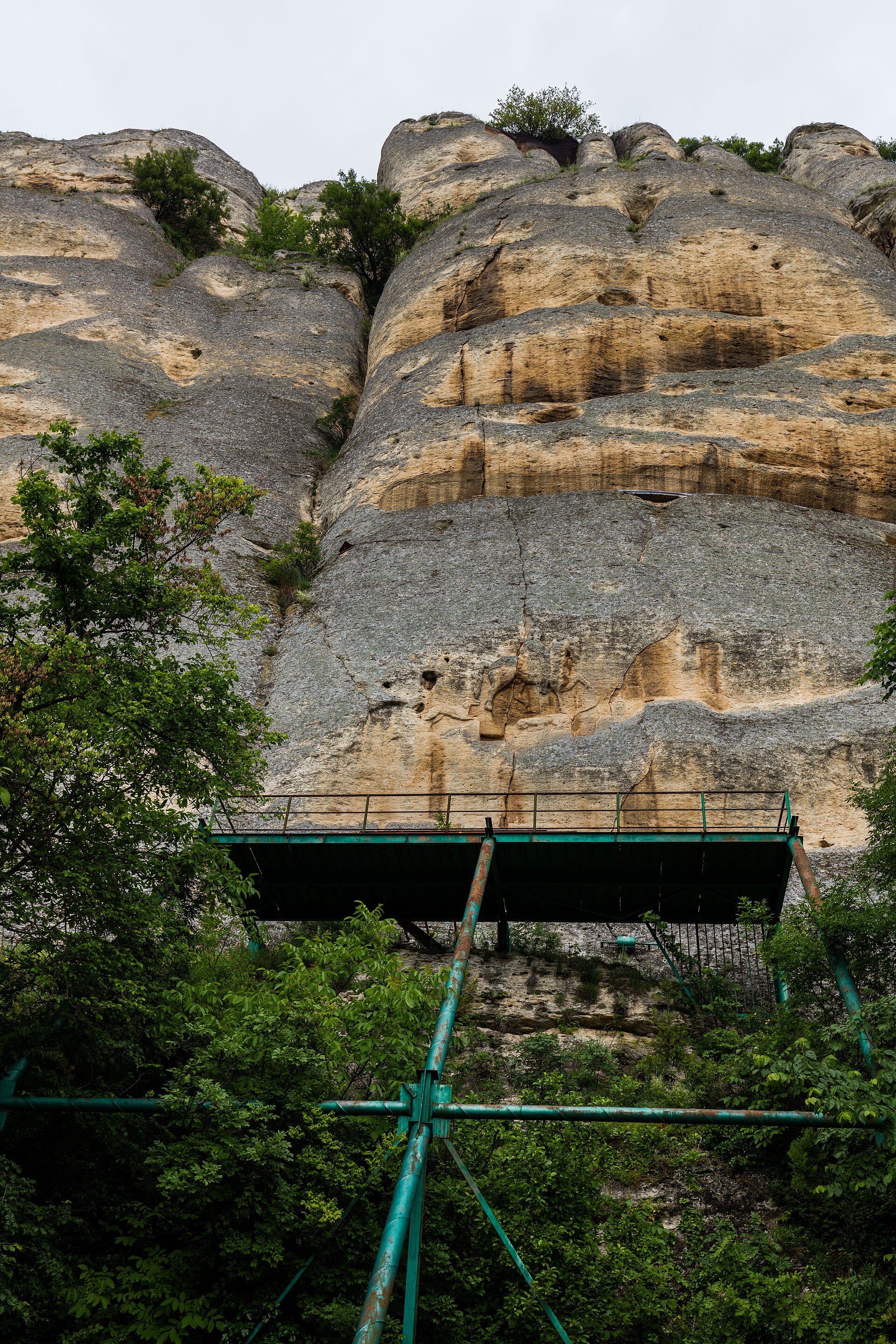
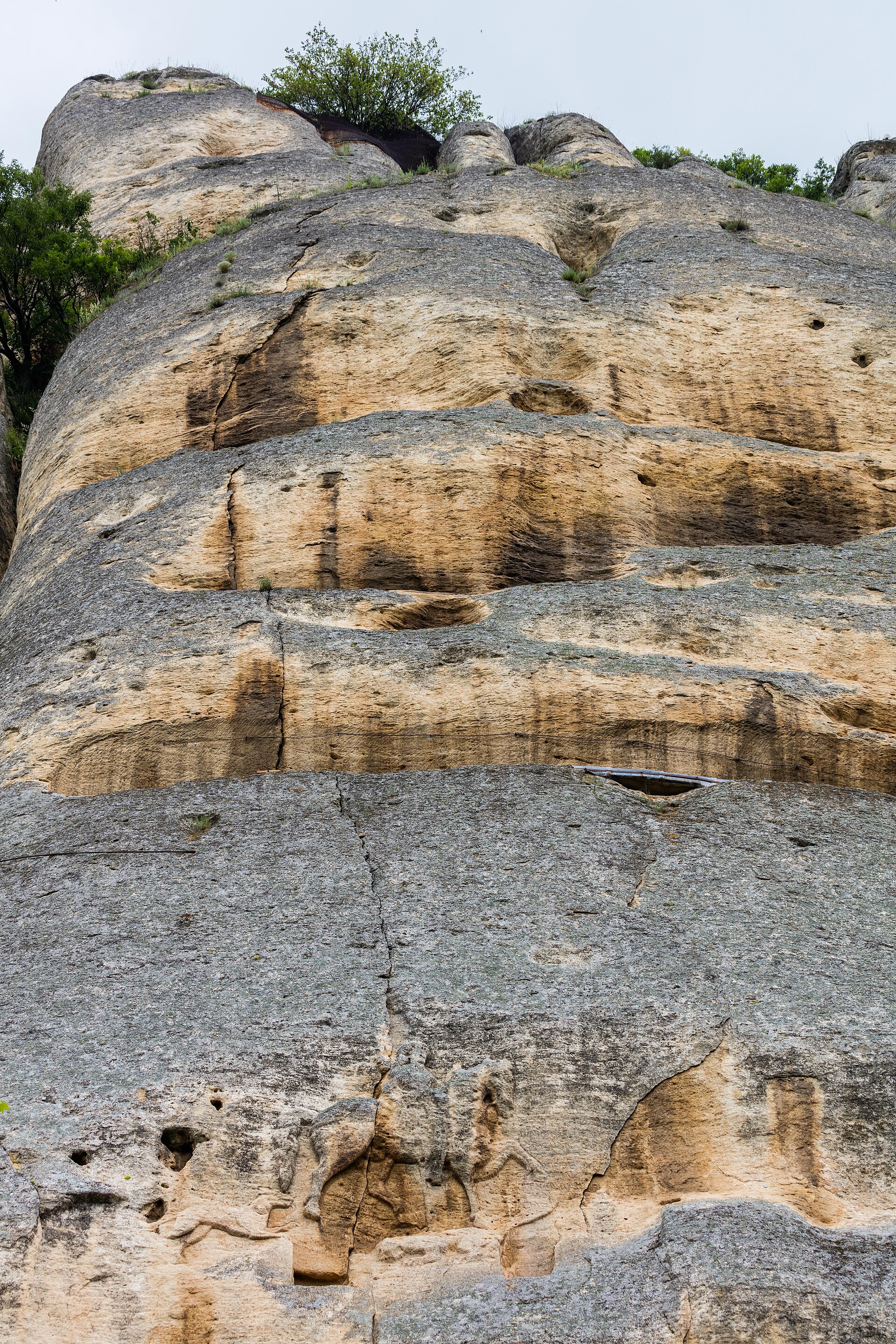
| What it is | An 8th-century rock relief carved into a nearly vertical, 100-meter-high limestone cliff face, 23 meters above ground |
| Known for | A unique UNESCO World Heritage site depicted on Bulgaria's coat of arms and coins |
| Wider complex | Madara Fortress, natural caves, and a 12th-century rock-hewn chapel |
| Best time to visit | April–October |
| Getting there | Regional roads, parking on the outskirts, and regular bus services from the nearest cities |
| Recommended stay | 1–2 days |
Why Visit Madara Rider
Madara Rider brings a distinctive early-medieval rock relief together with a wider archaeological complex in a protected national-park setting. The horseman, lion, dog, and surrounding Greek inscriptions record the site’s connection to the First Bulgarian Empire, while the fortress, caves, and rock-hewn chapel extend the visit beyond the main viewing platform. At about 15 km from Shumen, it can also be paired with the nearby archaeological sites of Pliska and Preslav.
Best Things to Do in Madara Rider
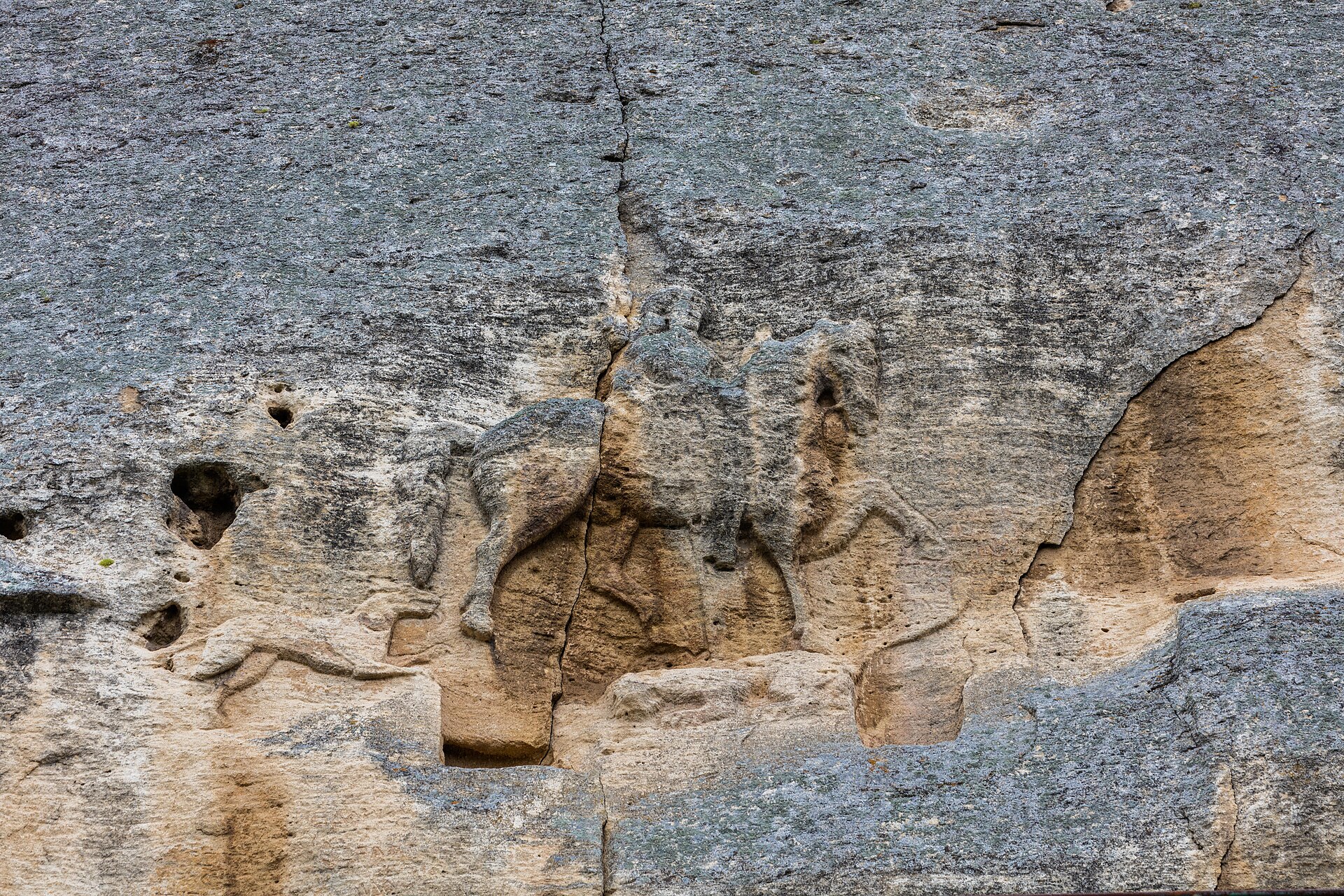
The Madara Rider (Madarski Konnik) is a unique UNESCO World Heritage site and one of Bulgaria's most treasured and famous cultural landmarks, depicted on the country's coat of arms and coins. Carved into a nearly vertical 100-meter-high limestone cliff face at 23 meters above ground level, this magnificent 8th-century rock relief measures 2.6 meters tall and depicts a grand bearded horseman spearing a lion with his lance, while a faithful dog runs behind in triumphant pursuit. The relief dates from the time of the First Bulgarian Empire (around 710–730 AD) and is widely believed to represent Khan Tervel or another early Bulgar ruler celebrating a decisive military victory over the Byzantines, possibly at the Battle of Marcellae.
Exploring Madara Rider: Top Attractions & Hidden Gems
It is the only such monumental rock relief from the Early Middle Ages found anywhere in Europe — a truly unique archaeological treasure with no known parallel. The three Greek inscriptions carved around the relief provide crucial historical evidence about the early Bulgarian state and its complex diplomatic and military relationship with the Byzantine Empire. The Madara site is part of a larger archaeological complex spanning the surrounding forest that includes the extensive Madara Fortress ruins on the plateau above (an important First Bulgarian stronghold), several large natural caves (including one used as a medieval hermitage by monks), and a 12th-century rock-hewn chapel with faded but still visible fresco fragments.
Local Culture & Food in Madara Rider
The area is now a protected national park with well-marked hiking trails through forest and rocky terrain. A dedicated viewing platform at the base allows visitors to see the relief up close, though binoculars help appreciate the fine sculptural details. The Madara Rider is located about 15 km from the city of Shumen. A visit can be combined with the nearby archaeological sites of Pliska (the first Bulgarian capital) and Preslav (the second capital) for a full day of First Empire history.
🗓 Best Time to Visit
April to October. Bulgaria experiences hot summers and cold winters. The Black Sea coast peaks in July-August. Spring (April-May) and autumn (September-October) are ideal for city exploration and hiking. Winter (December-March) is ski season in Bansko, Pamporovo, and Borovets.
🍽 Food & Drink
Eating in Madara Rider is about atmosphere too - historic stone buildings house traditional restaurants serving family recipes. Local dishes include shopska salata (chopped cucumber, tomato, onion with sirene cheese), banitsa (phyllo pastry with cheese and eggs), kavarma (slow-baked meat and vegetable casserole), tarator (cold cucumber yogurt soup), and grilled kyufte or kebapche. For drinks, try rakia (fruit brandy), mastika (anise liqueur), and Bulgarian wines (Mavrud, Melnik, and Misket varieties).
🚗 How to Get to Madara Rider by Bus, Car & Boat
By car: Well-connected by regional roads. Parking is available on the outskirts. By bus: Regular bus services from the nearest cities. Walking: Madara Rider is compact and best explored on foot. In Sofia, the metro is excellent and expanding — cheap and efficient. Buses and trams cover the rest. Taxi apps like TaxiMe or Yellow Taxi work well. Uber operates in Sofia.
🥘 Where to Eat in Madara Rider: Authentic Local Cuisine
While Madara Rider itself may not have extensive dining options, the nearby towns and villages offer excellent restaurants serving traditional regional cuisine. Many historical sites have a cafe or snack bar for light refreshments, but the real culinary experiences await in the surrounding settlements. Look for traditional konobe (taverns) and family-run restaurants where recipes have been passed down through generations. These establishments often use ingredients sourced from local farms and producers — fresh cheeses, cured meats, seasonal vegetables, and artisan breads. For a memorable experience, book a table at a restaurant with views overlooking the historical site, especially at sunset when the ancient stones glow golden. Local wineries near archaeological sites often offer tastings paired with regional specialties. Pack a picnic to enjoy on the grounds of the site itself — there's something special about eating surrounded by millennia of history. Bulgarian cuisine features fresh vegetables, dairy, and grilled meats — shopska salad, banitsa, and tarator are staples, complemented by excellent local wines and rakia.
🏨 Best Hotels Near Madara Rider
Accommodation options vary by season and location. Book ahead for summer weekends and major local events.
Find a stay in Madara Rider
Compare apartments, guesthouses, and vacation rentals while you finalize your route. Flexible cancellation can help when drive times or border plans change.
Browse stays in Madara Rider on Vrbo →Accessibility
Madara is a protected national park and archaeological complex with well-marked hiking trails through forest and rocky terrain. The page does not specify step-free paths, accessible toilets, accessible parking, or wheelchair access, so confirm practical arrangements with the site before travelling.
- Main relief: a dedicated viewing platform at the base provides the close view described on the page, but its surface, gradients, and any steps are not specified.
- Wider complex: the route to Madara Fortress on the plateau, the natural caves, and the rock-hewn chapel involves the site's forest and rocky terrain; trail surfaces, gradients, and step-free access are unknown.
- Arrival: regional roads, parking on the outskirts, and regular buses from the nearest cities are noted, but the distance from parking or bus drop-off to the platform and accessible transport facilities are not stated.
- Plan ahead: if you need step-free access, seating, an accessible toilet, or assistance, confirm availability directly with the site or your accommodation before booking.
Common Mistakes
- Treating the relief as the whole visit. The surrounding complex also includes the Madara Fortress, natural caves, and a 12th-century rock-hewn chapel.
- Assuming the site is a flat, paved stop. The page describes forest and rocky terrain with hiking trails, so plan for an outdoor walk beyond the viewing platform.
- Expecting a published bus timetable or exact parking setup. The page mentions regular buses from the nearest cities and parking on the outskirts, but gives no timetable, capacity, or distance to the relief.
- Leaving the zoom lens or binoculars behind. The dedicated platform brings you close, but the page notes that magnification helps with the relief's fine sculptural details.
- Assuming opening hours and entry prices. Neither is specified on this page; verify current visitor information before travelling.
- Trying to rush the nearby First Empire sites into the same stop. Pliska and Preslav are named as nearby archaeological sites to combine with Madara, but the page does not provide a timetable or travel duration.
Photography
Use the dedicated viewing platform at the base for the closest angle on the relief, and bring a zoom lens or binoculars for the sculptural details and Greek inscriptions. For wider frames, include the nearly vertical cliff face and use the Madara Fortress plateau for views over the valley and forest. If the rock-hewn chapel or caves are open, follow the site's photography instructions and avoid touching the carved surfaces. Drone note: Bulgaria's Directorate General "Civil Aviation Administration" (DG CAA) says UAS operators must register under Implementing Regulation (EU) 2019/947; use the official drone portal and check the current UAS geographical zones before flying at or near Madara. The DG CAA says open-category pilots must complete the applicable training and examination, with an exception for UAS under 250 g; flights in prohibited or restricted areas require an application no later than 7 days before the expected start.
Etiquette
Madara is both a protected natural setting and an archaeological complex. A few considerate habits are commonly appropriate:
- Stay on the marked trails: following the well-marked routes is customary in a protected park with rocky terrain.
- Protect the heritage: visitors often avoid touching or climbing on the relief, Greek inscriptions, fortress ruins, chapel, and other archaeological remains.
- Use the viewing platform considerately: keeping the platform clear for other visitors and taking turns at the closest viewpoints is common courtesy.
- Respect the chapel: if the rock-hewn chapel is open, quiet behavior and modest dress are customary in a religious space; follow any posted site instructions.
- Ask before photographing people: requesting permission is common courtesy when local visitors or staff are identifiable in a close frame.
- Be careful with drones: checking the Bulgarian aviation authority's current rules and avoiding disturbance to visitors and the heritage site is the considerate approach.
Frequently Asked Questions
When is the best time to visit Madara Rider?
April to October. Bulgaria experiences hot summers and cold winters. The Black Sea coast peaks in July-August. Spring (April-May) and autumn (September-October) are ideal for city exploration and hiking. Winter (December-March) is ski season in Bansko, Pamporovo, and Borovets.
How do I get to Madara Rider?
By car: Well-connected by regional roads. Parking is available on the outskirts. By bus: Regular bus services from the nearest cities. Walking: Madara Rider is compact and best explored on foot. In Sofia, the metro is excellent and expanding — cheap and efficient. Buses and trams cover the rest. Taxi apps like TaxiMe or Yellow Taxi work well.
How many days do you need in Madara Rider?
A visit to Madara Rider can be tailored to your interests. The Madara Rider (Madarski Konnik) is a unique UNESCO World Heritage site and one of Bulgaria's most treasured and famous cultural landmarks, depicted on the country's coat of arms and coins.
What is Madara Rider known for?
The Madara Rider (Madarski Konnik) is a unique UNESCO World Heritage site and one of Bulgaria's most treasured and famous cultural landmarks, depicted on the country's coat of arms and coins.
Where should I stay in Madara Rider?
While Madara Rider itself is primarily a heritage attraction, the nearest town or city offers a range of accommodation options to suit every budget. Look for hotels and guesthouses that provide easy access to the site — many offer shuttle services or are within walking distance.
🗺️ Build a route around Madara Rider: Add Madara Rider to my itinerary. It opens the planner with this stop selected, so you can add nearby places and set the trip length.
Plan your budget
For country-level budget ranges and planning assumptions, see the Balkan travel costs guide.