
Mostar
Mostar at a Glance
| Country | Bosnia & Herzegovina |
| Region | Herzegovina |
| Setting | Cultural and historical heart of Herzegovina on the Neretva |
| Highlights | Stari Most, the Old Town, Kujundžiluk bazaar, and Koski Mehmed Pasha Mosque |
| Best time | April–June and September–October (18–28°C/64–82°F); July–August reaches up to 38°C/100°F and is crowded |
| Recommended stay | 1–2 days |
| Getting around | The Old Bridge and Old Town are walkable; most attractions are within a 15-minute walk |
Why Visit Mostar
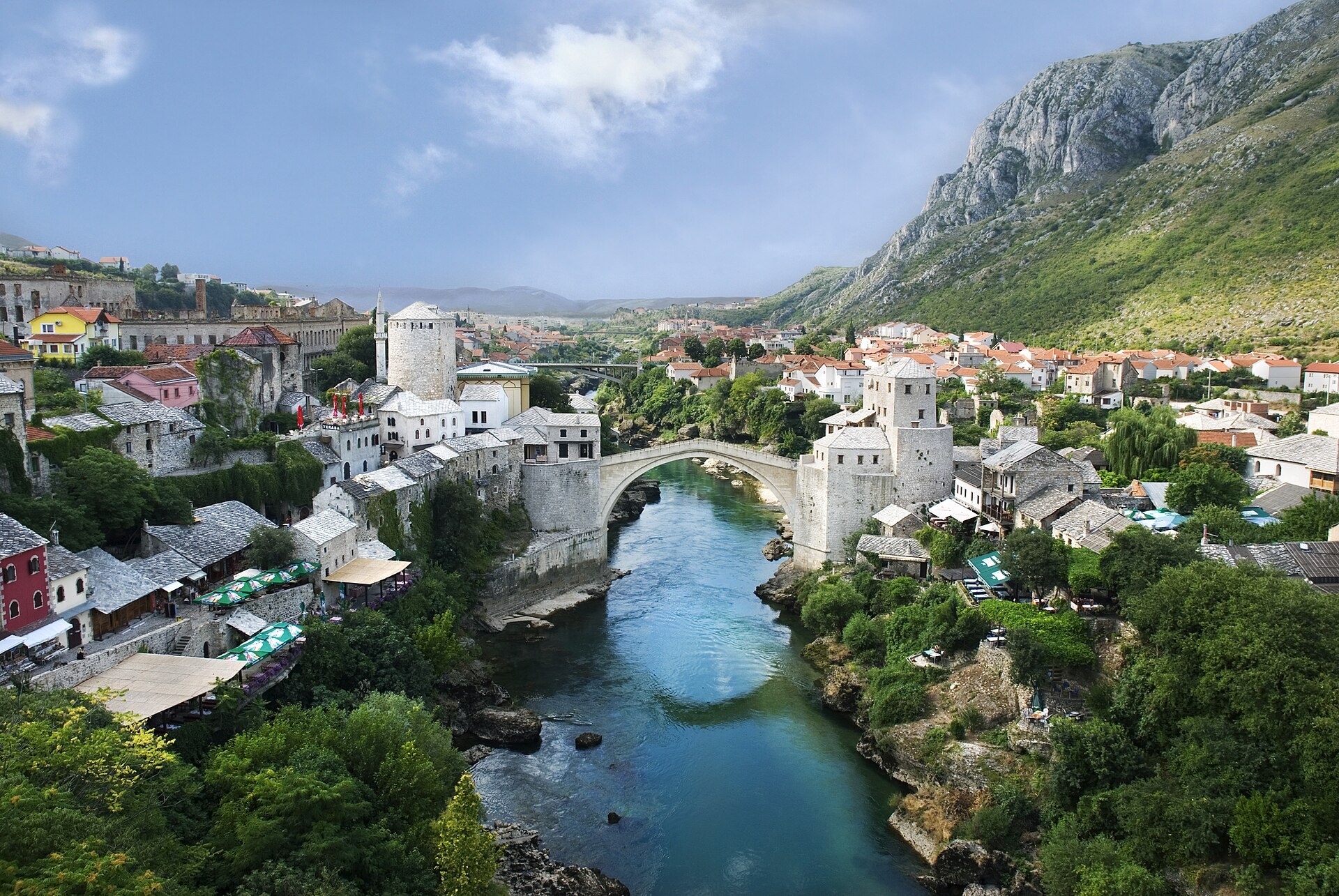
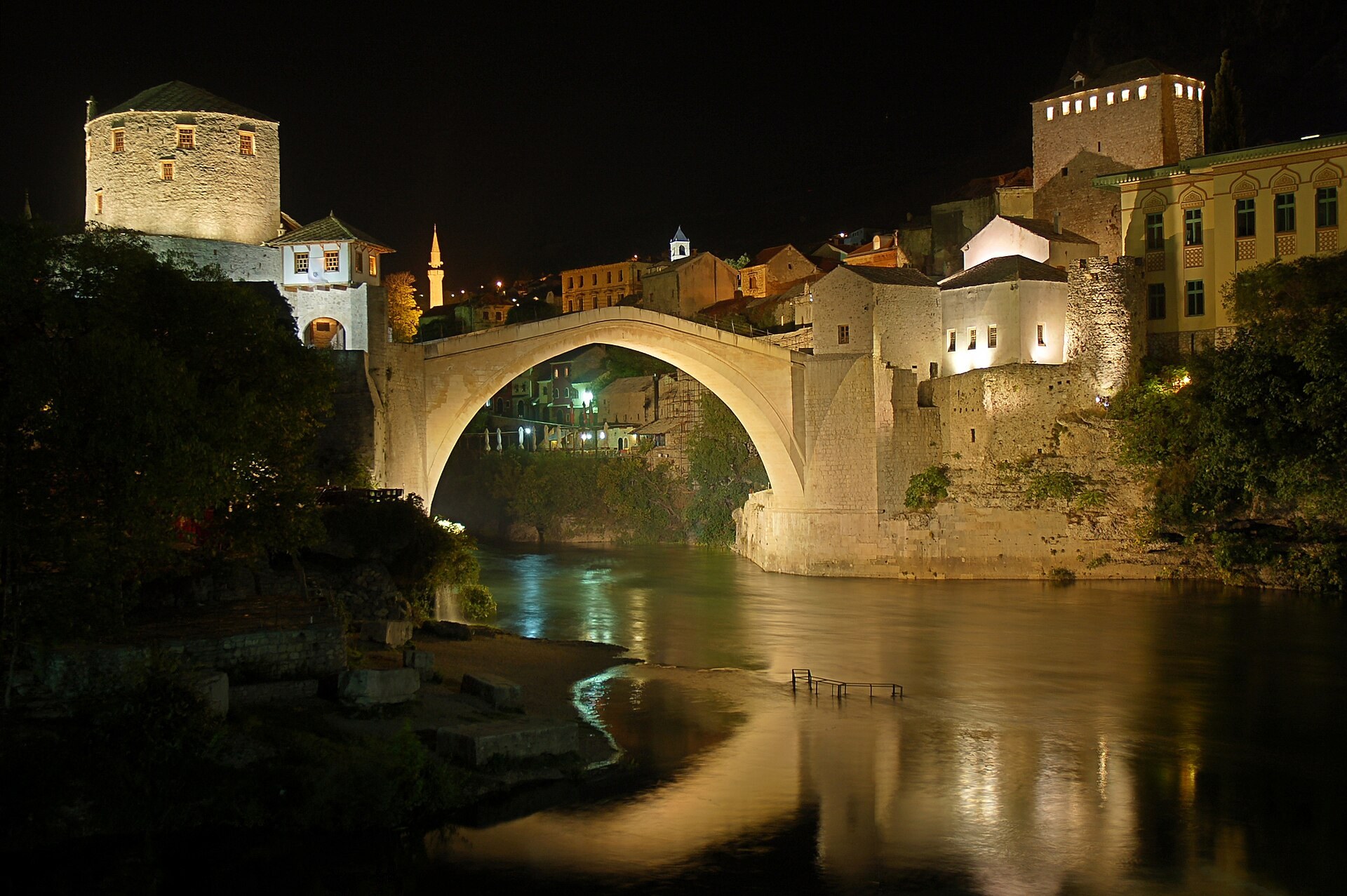
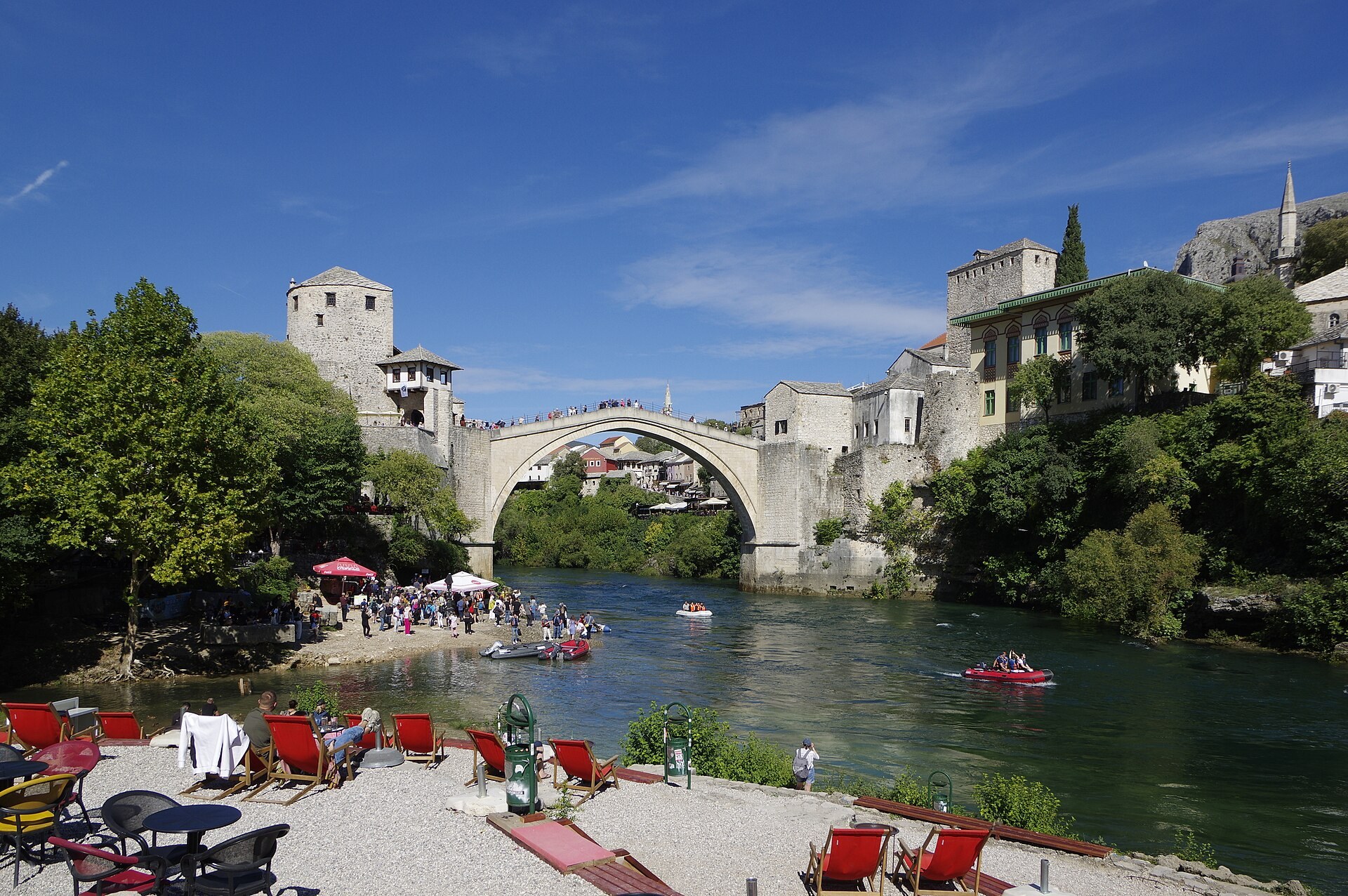
Mostar is the cultural and historical heart of Herzegovina, shaped by the Neretva River and the Old Bridge that spans it. Stari Most links Ottoman architecture with the city's recent history: Mimar Hayruddin built it in 1566, it was destroyed on 9 November 1993, and it reopened after rebuilding in 2004. The Old Town, Kujundžiluk bazaar, Koski Mehmed Pasha Mosque, and war museums make the visit about more than one bridge.
Best Things to Do in Mostar
Mostar is the cultural and historical heart of Herzegovina, a city shaped by the emerald-green Neretva River and the iconic Stari Most (Old Bridge) that spans it. The city's name itself comes from the bridge — "mostari" were the bridge keepers who maintained it during Ottoman times. Built in 1566 by the Ottoman architect Mimar Hayruddin (a student of the great Mimar Sinan), the bridge was a marvel of 16th-century engineering: a single humpback arch spanning 29 metres and rising 24 metres above the river, constructed without mortar. For 427 years it stood as one of the finest examples of Ottoman architecture in the Balkans, until it was destroyed by Croat artillery fire on 9 November 1993 during the Bosnian War — a moment captured on film that became a symbol of the war's senseless destruction.
Exploring Mostar: Top Attractions & Hidden Gems
The bridge was painstakingly rebuilt using original Ottoman techniques and locally quarried stone, reopening in 2004. It was inscribed as a UNESCO World Heritage Site in 2005 alongside the Old Town of Mostar. Today, the city is a powerful symbol of resilience and reconciliation. The Old Town (Stari Grad) on the east bank is a labyrinth of cobbled streets — Kujundžiluk, the old bazaar, is lined with copper smiths hammering out plates and jewellery, artisan carpet shops, and handicraft stalls selling intricate metalwork and hand-painted ceramics.
Local Culture & Food in Mostar
The west bank's Koski Mehmed Pasha Mosque offers the most famous view of the bridge from its minaret. Mostar's restaurants along both banks of the Neretva serve grilled trout, ćevapi, and local wines from the surrounding Herzegovina vineyards. Beyond the bridge, the city reveals layers of history: Ottoman mosques, Austro-Hungarian boulevards, Yugoslav-era apartment blocks, and war-scarred buildings — many still bearing bullet holes — standing alongside newly rebuilt structures. The Museum of War and Genocide Victims and the War Photo Exhibition provide sobering context to the city's recent past. For those who venture further, Mostar is the gateway to some of Herzegovina's most beautiful sights: Blagaj's Dervish Monastery built into a cliff face, the medieval stone village of Počitelj, the thundering Kravice Waterfalls, and the wine cellars of the surrounding hills.
🗓 Best Time to Visit
April-June and September-October offer the best experience with mild temperatures (18-28°C/64-82°F), manageable crowds, and the river at its most scenic. September adds the bonus of the Herzegovina wine harvest. July-August is hot (up to 38°C/100°F) and crowded with day-trippers — visit the Old Bridge early morning or late afternoon. The traditional Mostar Bridge Diving competition is in late July. Winter (December-February) is quiet with occasional snow creating a magical atmosphere around the bridge, but some restaurants and shops have reduced hours. For the perfect visit, aim for May or September.
🍽 Food & Drink
Mostar is a food lover's destination at the crossroads of Mediterranean and Ottoman cuisine. Ćevapi (€3-5) — grilled minced meat sausages served in flatbread (somun) with raw onions — is the must-try street food. Burek (€2-3) — flaky phyllo pastry filled with meat, cheese, or spinach — makes an excellent breakfast. Neretva trout (€7-10) — fresh river trout grilled with herbs and lemon — is a local specialty. Pljeskavica (€4-7) — a large grilled meat patty, often stuffed with cheese — is another favourite. Bosnian coffee (€1-2) served with rahat lokum (Turkish delight) is a daily ritual — take your time and sip slowly. Herzegovina wines are excellent: Žilavka (crisp white, perfect with trout) and Blatina (full-bodied red). Most restaurants along the Neretva offer riverside dining with views of the bridge — these are tourist prices but the atmosphere is worth it. For cheaper and more authentic food, head one street back from the river. Desserts: tufahije (poached apples stuffed with walnuts, €2-3), baklava (€2), and kaimak (creamy dairy spread with bread). Rakija — local fruit brandy, usually plum (šljivovica) or grape (loza) — is the traditional aperitif or digestive, served in small glasses.
🚗 How to Get to Mostar by Bus, Car & Boat
By bus: Mostar's bus station is a 10-minute walk from the Old Town. Buses run frequently to Sarajevo (2.5h, €10-15), Dubrovnik (3h, €15-20), Split (4h, €20-25), and Medjugorje (45min, €5-8). By train: The train from Sarajevo to Mostar (2h, €5-8) is one of the most scenic journeys in the Balkans — it follows the Neretva River canyon through 65 tunnels. Check the schedule as there are only 3-4 departures daily. By car: Mostar is on the M-17 highway, 2 hours from Sarajevo and 2.5 hours from Dubrovnik. Parking is available at several lots on the edge of the Old Town (€1-2/hour). Getting around: Mostar is very walkable — all major attractions are within a 15-minute walk of the Old Bridge. Taxis are affordable (€2-3 for most trips within town). For day trips to Blagaj, Počitelj, and Kravice, you can either take local buses, join a tour (€25-40 per person), or hire a taxi for the afternoon (€30-50). Rental cars from Mostar start at €30/day.
🥘 Where to Eat in Mostar: Authentic Local Cuisine
Restaurant Šadrvan (€8-15) — Set in the Old Town square by the bridge, this is the most atmospheric restaurant in Mostar. Try the mixed grill and local wines while watching the world go by. Urban Grill (€6-12) — Modern take on Bosnian classics. Their ćevapi and pljeskavica are considered some of the best in town. Restoran Vrata Orijenta (€5-10) — Excellent Bosnian cuisine in a relaxed setting, slightly away from the tourist crowds. Baklajlija (€2-4) — The place for desserts and Bosnian coffee. Local bakeries (pekare) — Grab a fresh burek for breakfast for just €1-2. Tima-Irma (€4-8) — A local favourite just off the main square serving large portions of Bosnian home cooking. Riverside restaurants (€10-20) — The restaurants on the Neretva west bank have the best views of Stari Most — perfect for a sunset dinner. Their trout and seafood dishes are the highlights. Wine lovers should visit a Herzegovina wine bar for tastings of local Žilavka and Blatina.
🏨 Best Hotels in Mostar
Mostar has excellent accommodation across all budgets, much of it within walking distance of the Old Bridge. Hotel Muslibegović (€60-120/night) is the most famous hotel in Mostar — a beautifully restored 18th-century Ottoman house with rooms set around a courtyard garden. Staying here is an experience in itself. Hotel Pasha (€40-80/night) is a modern mid-range option one street from the Old Town with clean rooms and friendly service. Villa Fortuna (€35-60/night) offers great-value rooms near the bus station with a small pool. Guesthouses (€20-40/night) are plentiful in the Old Town — family-run stone houses with breakfast included. Hostel Miran (€10-20/bed) is one of the best hostels in the Balkans. Book well ahead for July-August. For a special experience, request a room with a Neretva River view — the sound of the river at night and the view of the illuminated bridge is unforgettable.
Find a stay in Mostar
Compare apartments, guesthouses, and vacation rentals while you finalize your route. Flexible cancellation can help when drive times or border plans change.
Browse stays in Mostar on Vrbo →Accessibility
Mostar's Old Town is compact and mostly walkable, with major attractions within a 15-minute walk of the Old Bridge. Access is not uniformly step-free: cobbled streets, river and bridge approaches, old buildings, and the terrain around the Koski Mehmed Pasha Mosque minaret can make movement more demanding. Check current conditions with your accommodation and each site before you go; do not assume step-free access, lifts, accessible toilets, or accessible transport.
Common Mistakes
- Arriving at midday in July-August. The Old Bridge and Old Town are crowded with day-trippers then; early morning or late afternoon is a better fit for a calmer visit.
- Treating only the bridge as Mostar. Leave time for the Old Town, Kujundžiluk bazaar, Koski Mehmed Pasha Mosque, and the wider river setting.
- Skipping the Old Town and war-history context. The war museums and War Photo Exhibition are part of the city's recent history, not optional background.
- Assuming winter hours stay the same. Winter is quieter, but many restaurants and shops have reduced hours.
- Planning day trips without current transport checks. Recheck transport options and timings before fixing plans for Blagaj, Počitelj, Kravice Waterfalls, or Medjugorje.
Photography
For bridge light, try early morning or late afternoon, especially during the crowded July-August period. Look for layered views that include the Neretva, Stari Most, and the Old Town, then turn to Kujundžiluk for copper and handicraft details. The War Photo Exhibition and war museums add historical context, but photograph only where allowed. Check current registration and flight rules with the Bosnia and Herzegovina Directorate of Civil Aviation (BHDCA) before flying.
Day Trips
Blagaj Tekke — 15 minutes. The Dervish Monastery built into a cliff face makes Blagaj Tekke a short extension of a Mostar stay. Read the Blagaj Tekke guide →
Počitelj — 20 minutes. The medieval stone village is another nearby Herzegovina stop that pairs naturally with Mostar. Read the Počitelj guide →
Kravice Waterfalls — 40 minutes. Allow time for the thundering waterfalls on a longer day beyond the Old Town. Read the Kravice Waterfalls guide →
Medjugorje — 35 minutes. Medjugorje is a further nearby option for a second day, subject to current transport conditions. Read the Medjugorje guide →
Etiquette
A few considerate habits help when moving between Mostar's bridge, Old Town, religious sites, museums, and bazaar:
- In the Old Town, a slower pace is often appropriate on cobbled streets and around the bridge crossings.
- In Kujundžiluk, it is common to give copper and handicraft shops room to work and to ask before taking close-up photos of people or their work.
- A quiet and respectful manner is customary around Koski Mehmed Pasha Mosque and its minaret; check current visitor guidance before entering.
- At the war museums and War Photo Exhibition, a quiet tone is often appropriate, and photography should follow any current venue guidance.
- Asking before photographing people is common courtesy, particularly in the Old Town and bazaar.
- When taking bridge or river photos, it is often considerate to move aside rather than interrupting someone else's view.
Frequently Asked Questions
When is the best time to visit Mostar?
April-June and September-October are the best months to visit Mostar. Spring brings warm temperatures (18-28°C/64-82°F), blooming flowers, and the famous Neretva River flowing at full force under the bridge. Autumn offers harvest season with excellent local produce and milder weather. July-August is hot (up to 38°C/100°F) and packed with cruise-ship day-trippers. The famous Mostar Bridge Diving competition takes place in late July. Winter is quiet and cool, with occasional snow that makes the bridge look magical but many restaurants and shops have reduced hours.
How do I get to Mostar?
The nearest airports are Sarajevo International Airport (SJJ, 2 hours by car, €30-40 by bus) and Dubrovnik Airport (DBV, Croatia, 2.5 hours, €25-35 by bus). Mostar has excellent bus connections to Sarajevo (2.5 hours, €10-15), Dubrovnik (3 hours, €15-20), Split (4 hours, €20-30), and Medjugorje (45 minutes). The train from Sarajevo to Mostar is one of Europe's great scenic rail journeys — it winds through the Neretva River canyon for 2 hours and costs just €5-8. Mostar's small airport (OMO) has seasonal flights from Vienna and Istanbul. By car, Mostar is well-connected via the M-17 highway from Sarajevo and the M-6.1 from Dubrovnik.
How many days do you need in Mostar?
1-2 days is sufficient. One full day allows you to explore the Old Bridge, Kujundziluk Bazaar, Koski Mehmed Pasha Mosque, the war damage museum, and enjoy a riverside dinner. A second day opens up excellent day trips: Blagaj Tekke (15 min), Pocitelj (20 min), Kravice Waterfalls (40 min), and Medjugorje (35 min) are all easily accessible. Mostar is compact and very walkable — most attractions are within a 15-minute walk of the Old Bridge.
What are the top attractions in Mostar?
Stari Most (the UNESCO-listed 16th-century Ottoman bridge, rebuilt in 2004), the Kujundziluk Old Bazaar with copper and handicraft shops, Koski Mehmed Pasha Mosque with its panoramic minaret views, Kajtaz House (a beautifully preserved Ottoman home), the War Photo Exhibition showing the destruction and rebuilding, and the Tara Tower and Heleb Tower at each end of the bridge. For the best view, climb the Koski Mehmed Pasha Mosque minaret (€5) or cross the bridge and hike up to the tower on the west bank. Nearby day trips include the Blagaj Dervish Monastery, Pocitelj village, and Kravice Waterfalls.
What should I eat in Mostar?
Mostar is the culinary heart of Herzegovina. Must-try dishes include ćevapi (grilled minced meat sausages in flatbread with onions, €3-5), burek (phyllo pastry filled with meat or cheese, €2-3), pljeskavica (grilled stuffed burger, €4-6), and grilled trout from the Neretva River (€7-10). For dessert, try tufahije (poached apples with walnuts and cream) and baklava. Bosnian coffee (€1-2) served with a sugar cube and rahat lokum is a ritual — take your time. Local wines from Herzegovina (particularly Žilavka white and Blatina red, €2-4 per glass) are excellent. Rakija (fruit brandy, €1-2) is the traditional aperitif.
🗺️ Build a route around Mostar: Add Mostar to my itinerary. It opens the planner with this stop selected, so you can add nearby places and set the trip length.
Plan your budget
For country-level budget ranges and planning assumptions, see the Balkan travel costs guide.