
Boka Kotorska Bay
Boka Kotorska Bay at a Glance
| Country | Montenegro |
| Region | Montenegrin Adriatic coast — Outer Bay past Herceg Novi, the narrow Verige Strait, and the Inner Bay around Kotor and Perast |
| What it is | A submerged river canyon (a ria, not a fjord) punching 28 km inland from the Adriatic in four basins |
| Currency | Euro (€) — every price on this page is quoted in EUR |
| Language | Montenegrin |
| Nearest airports | Tivat (TIV) — 10 min from Kotor by taxi (€15–20); Dubrovnik (DBV) — 90 min via the Debeli Brijeg border (20–40 min queues in summer) |
| Best time to visit | May–June and September–early October; July–August brings the cruise-ship crush |
| Recommended stay | 2 days minimum — day one for Kotor's old town and the Walls hike, day two for Perast; add a third for a Blue Cave tour or a hike |
Why Visit Boka Kotorska Bay
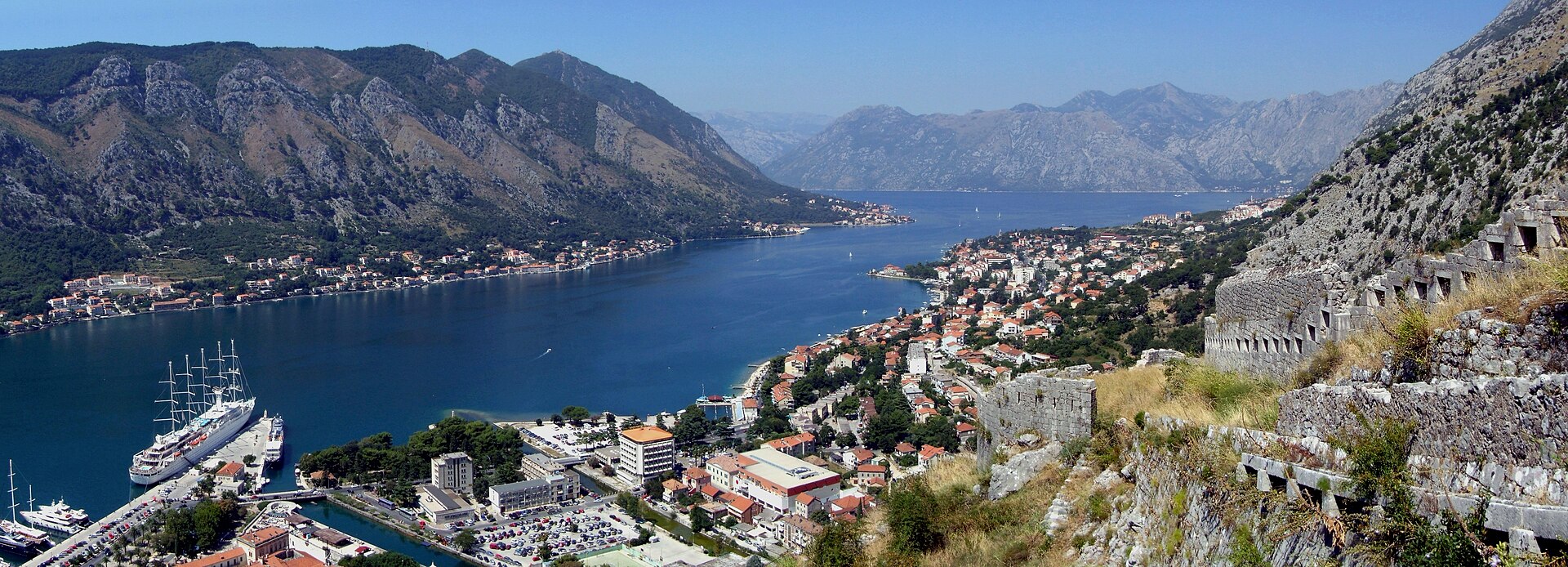
Boka Kotorska Bay is the natural feature that defines the Montenegrin coast: a submerged river canyon (a ria, not a fjord) that punches 28 km inland and splits into four basins beneath Mount Lovćen's near-vertical limestone wall. Its waterfront towns — Perast above all — are strings of stone palaces built by 17th- and 18th-century maritime captains, and Our Lady of the Rocks, an island built by hand since 1452, sits a kilometre offshore. Come in May–June or September–early October, when wisteria covers Perast's walls and the July–August cruise crush hasn't arrived.
Best Things to Do in Boka Kotorska Bay
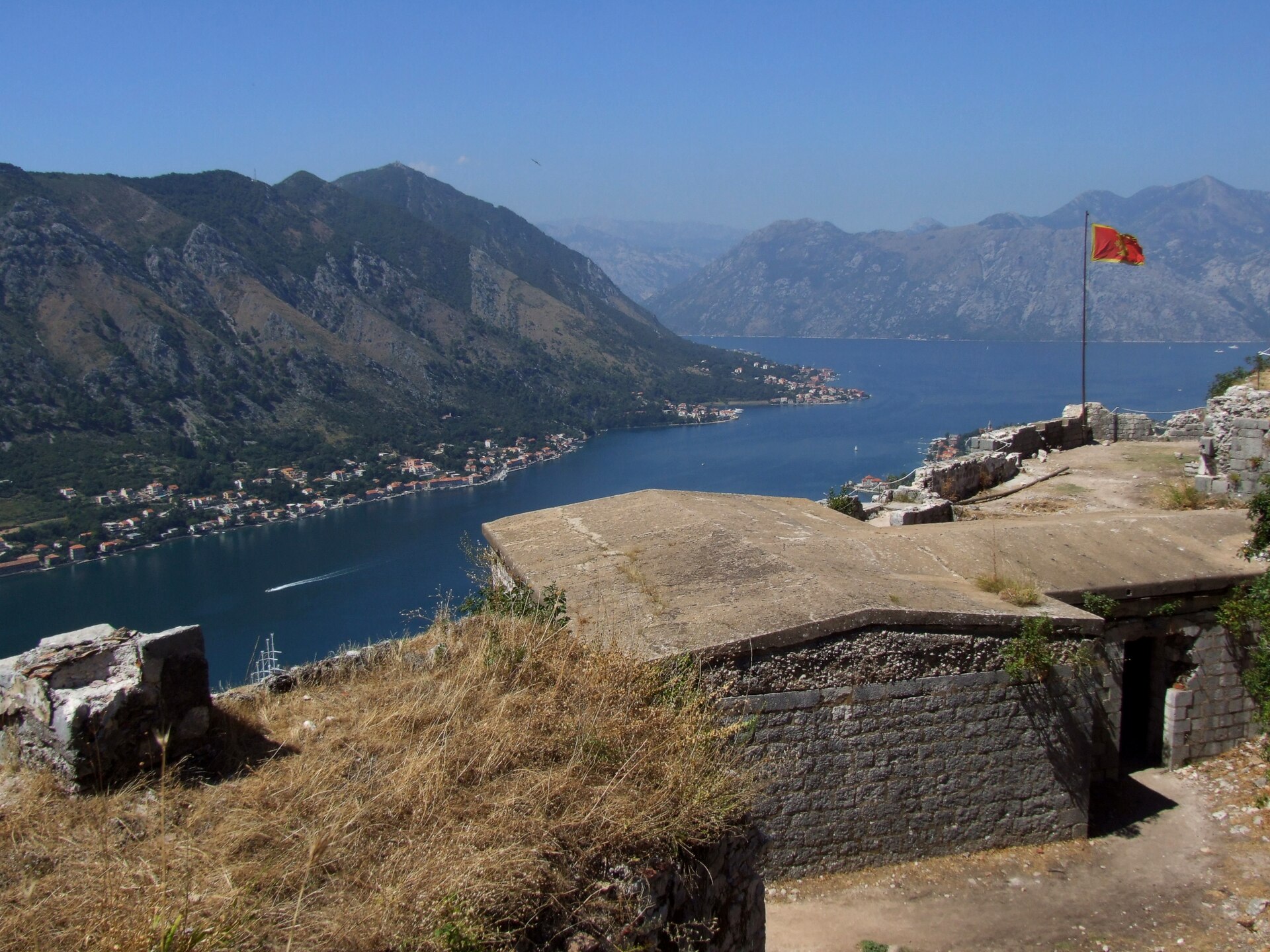
Boka Kotorska Bay is a submerged river canyon (a ria, not a fjord — but don't tell Instagram) that punches 28 km inland from the Adriatic, splitting into four basins: the Outer Bay past Herceg Novi, the narrow Kumbor and Verige straits (Verige squeezes to just 230 m wide — the Kamenari–Lepetane ferry crosses here), and the Inner Bay where Kotor and Perast float at the base of Mount Lovćen's near-vertical limestone wall. The coastal road from Herceg Novi to Kotor snakes through Bijela, Perast, and Dobrota, each village a string of stone palaces and church bell-towers built by 17th- and 18th-century maritime captains. In Perast, every family once owned a ship — the town's 17 surviving Baroque palaces line the waterfront like a museum of nautical wealth.
Exploring Boka Kotorska Bay: Top Attractions & Hidden Gems
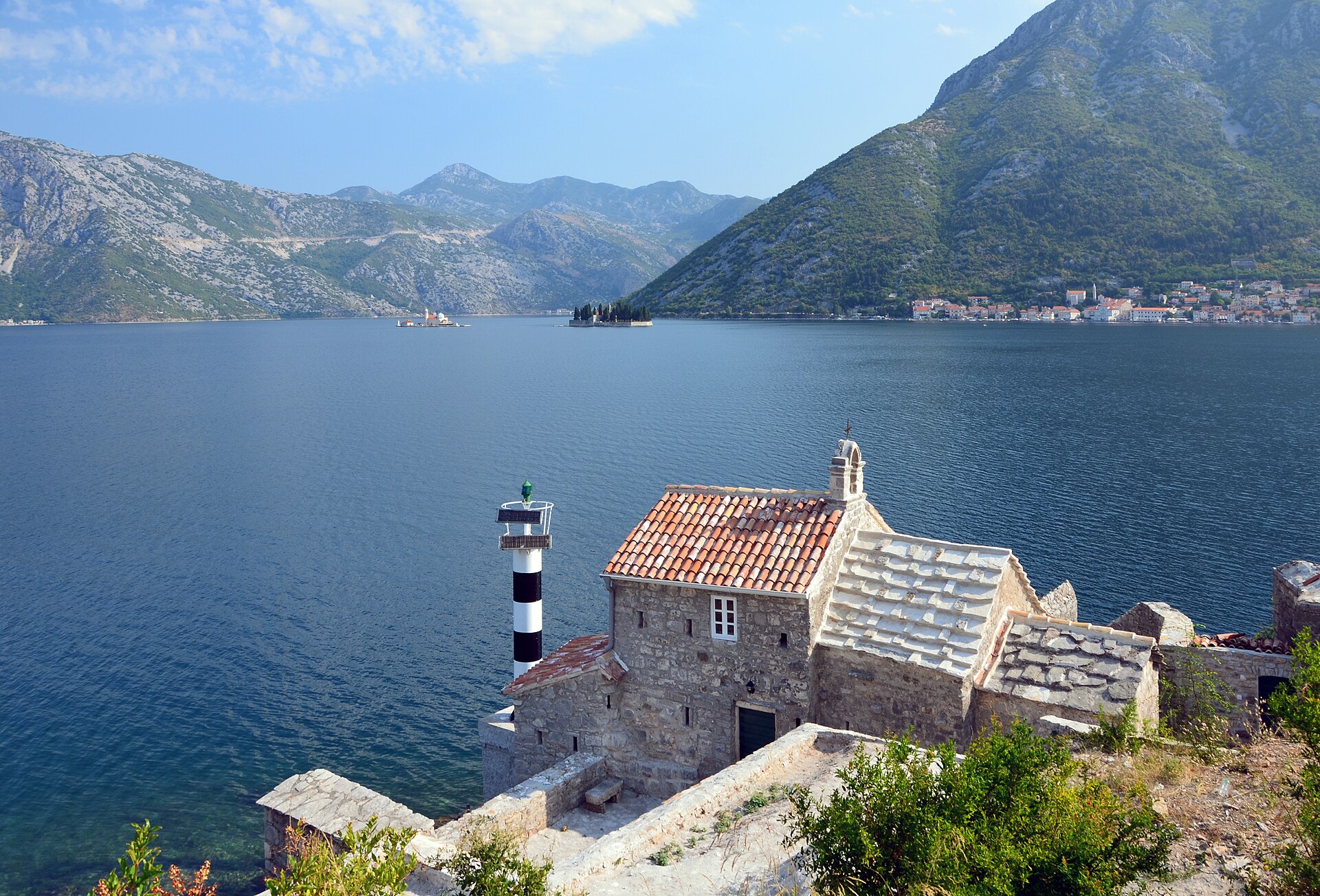
A kilometre offshore, two islands break the bay's surface: St. George (a natural island with a 9th-century Benedictine monastery, off-limits to the public) and Our Lady of the Rocks, an artificial island built by hand starting in 1452 when local sailors sank old ships laden with stones as an act of faith. The Fašinada ritual renews this every 22 July — a flotilla of boats circles the island while passengers toss rocks into the shallows.
Local Culture & Food in Boka Kotorska Bay
Inside the church, a tapestry by Jacinta Kunjić-Mijović took 25 years to weave using silver and gold thread from her husband's voyages; when the thread ran out, she wove her own hair into the angel's wings. The Cold War submarine tunnels carved into the Lustica Peninsula — built by the Yugoslav Navy to hide patrol boats from NATO satellites — are now a highlight of speedboat tours from Kotor. The bay's calm inner waters make for sheltered sea-kayaking from Muo to Perast, while the Vrmac Ridge hike (9 km, 300 m elevation gain) delivers a two-bay panorama at the summit Sveti Ilija (766 m), with Fort Vrmac's pitch-black Austro-Hungarian tunnels waiting to be explored with a headlamp.
🗓 Best Time to Visit
May–June and September–early October are the sweet spots. Wisteria drips from the stone walls of Perast in May, the water is warm enough for swimming by June, and the crowds haven't yet reached the July–August crush when cruise ships disgorge thousands into Kotor's old town between 10:00 and 16:00. September brings settled weather, calm seas for kayaking, and the grape harvest in the surrounding hills — local wineries open their doors for tastings of Vranac and Krstač. July and August hit 35°C+ and the ferry queues at Kamenari–Lepetane can stretch 45 minutes; book accommodation well ahead and start your hikes by 07:00. From November to March, most waterfront konobas close and boat tours stop running, but the winter light on the bay is dramatic and you'll have the fortress almost to yourself — Kotor's Walls entry drops to €8 instead of €15.
🍽 Food & Drink
The bay's culinary identity runs on three pillars: seafood pulled straight from the Adriatic, smoked meats from the Njeguši mountain village above Kotor, and bold red wines from the Vranac grape grown in the surrounding hills. The signature dish of the region is crni rižot — black risotto cooked with cuttlefish ink, best had at Konoba Portun in Dobrota, a seaside fish-and-wine spot where grilled calamari and sea bass with truffle polenta run about €20–25 a plate and the homemade bread with cuttlefish-ink spread arrives free. In Perast, Konoba Školji (just off the waterfront) serves both Balkan grilled meats and seafood, while Trattoria Rosmarino gets consistent top marks from locals. Njeguški pršut — dry-cured ham, smoked over beech and juniper — is the essential antipasto, usually served with local sir (cheese) and maslinovo ulje (olive oil). A peka — octopus or lamb slow-cooked under a metal bell buried in embers — must be ordered 24 hours ahead. For wine, Vranac is the full-bodied red that pairs with everything; the white Krstač is lighter, more mineral, better with seafood. Loza (grape brandy) comes after dinner — one glass is a digestif, two is a conversation.
🚗 How to Get to Boka Kotorska Bay by Bus, Car & Boat
Fly into Tivat Airport (TIV) — it's 10 minutes from Kotor by taxi (€15–20). Dubrovnik Airport (DBV) is 90 minutes away via the Debeli Brijeg border crossing — expect 20–40 minute queues in summer. The Kamenari–Lepetane ferry short-cuts the drive from Herceg Novi to Tivat: €4.50 per car (driver included), free for foot passengers, runs every 5–10 minutes, crossing time 3–5 minutes across the Verige Strait. This saves 30–40 km of driving around the bay. Taxi boats from Perast's waterfront to Our Lady of the Rocks cost €5–10 round trip, cash only, and depart as soon as they fill (every 5–15 min in season). Blue Cave speedboat tours from Kotor run €30–40 per person for a 3-hour trip that includes the submarine tunnels, Mamula island, and a swim stop. The Ladder of Kotor hike trailhead is a 10-minute walk from the North Gate (River Gate) of Kotor's Old Town — look for Pekara AS Bakery on Tabačina Road. Parking in Kotor's Old Town is restricted; the large lot near the Škurda River costs €1.50/hour in summer. Renting a car is useful for reaching Njeguši (the pršut village) and Lovćen National Park (€3 entry fee), but the one-way streets around the old town can be confusing — consider parking outside and walking.
🥘 Where to Eat in Boka Kotorska Bay: Authentic Local Cuisine
Konoba Portun (Dobrota) — a fish-and-wine restaurant built right on the water's edge. The menu changes daily with the catch: grilled squid (€14), sea bass with truffle polenta (€23), a real fish soup (€9), and homemade bread with cuttlefish-ink spread and feta-garlic dip. Book a waterfront table at sunset. Konoba Školji (Perast) — off the main waterfront, known for Balkan meat platters alongside seafood; their peka (order ahead) is a local favourite. Trattoria Rosmarino (Perast) — consistently the highest-rated restaurant in Perast on Tripadvisor (4.6, 1,100+ reviews), serving Mediterranean-Italian seafood in a narrow stone courtyard. Restaurant Conte (Perast) — part of the hotel of the same name, dining on a covered terrace with uninterrupted views of Our Lady of the Rocks; grilled branzin (sea bass) for €18–22. Platanus (Kotor waterfront) — wide bay views and a varied menu from coffee to dinner, a safe bet for lunch. Konoba Scala Santa (Kotor Old Town, Salad Square) — traditional dishes inside a vaulted stone interior, open 9:00–23:00. The best-value meals are found one block back from the waterfront promenade, not on it. Always ask what the dnevna kuhinja (daily kitchen) is — it's the freshest thing in the house.
🏨 Best Hotels in Boka Kotorska Bay
In Perast, the Heritage Grand Perast (by Rixos) occupies a restored 18th-century Baroque palace on the waterfront — doubles from €200/night in shoulder season, with breakfast on a terrace overlooking Our Lady of the Rocks. Hotel Conte (⭐⭐⭐⭐ on Tripadvisor) sits across the same quay at roughly €120–150/night and its attached restaurant serves excellent grilled fish. Vila Perast Boutique Hotel, a converted bourgeois residence with a small pool and spa, starts at €143/night. For Old World character inside Kotor's city walls, boutique apartments in restored merchant houses run €80–130/night on Booking.com — look for properties on Stari Grad alleys away from the main square to avoid bar noise. Dobrota, the coastal strip a 15-minute walk north of Kotor's old town, offers the best value: guesthouses with balconies directly over the water at €60–100/night in June or September. Hotel Admiral in Perast is a budget pick from €52/night. For the full Boka experience, book a room with a balcony facing the bay — the morning light across the water, before the cruise ships arrive, is worth the upcharge.
Find a stay in Boka Kotorska Bay
Compare apartments, guesthouses, and vacation rentals while you finalize your route. Flexible cancellation can help when drive times or border plans change.
Browse stays in Boka Kotorska Bay on Vrbo →Accessibility
The bay is a medieval coastline — walled towns, waterfront quays, and mountain trails — so plan around these realities:
- Steep old-town streets: Kotor's Old Town is a walled medieval city with narrow, steep and often stepped streets that climb toward the fortress — the Walls of Kotor hike is a 2–3 hour ascent. Confirm step-free access to any apartment inside the walls with the host before booking.
- Stairs and quays: Perast's waterfront palaces and the taxi-boat boarding points involve steps and uneven stone, and boarding the small boats is not wheelchair accessible. Confirm with the boat operators on the day.
- Ferry access: the Kamenari–Lepetane ferry is free for foot passengers and runs every 5–10 minutes, crossing the Verige Strait in 3–5 minutes; vehicles board by queueing.
- Cruise crowds: in July–August, cruise ships disgorge thousands of passengers into Kotor's old town between 10:00 and 16:00 — the narrow streets get congested and slow. Visit early in the morning or in the shoulder months.
- Parking and driving: parking in Kotor's Old Town is restricted; the large lot near the Škurda River costs €1.50/hour in summer, and the one-way streets around the old town can be confusing — consider parking outside and walking.
Common Mistakes
- Calling it a fjord. Boka Kotorska Bay is a submerged river canyon — a ria, carved by a river, not a glacier — even if some Instagram captions say otherwise. It punches 28 km inland in four basins.
- Being in Kotor's old town mid-day in July–August. Cruise ships disgorge thousands of passengers between 10:00 and 16:00 and the heat hits 35°C+. See the old town early or in May–June/September–early October.
- Hitting the Kamenari–Lepetane ferry at peak times. In July–August the queues can stretch 45 minutes. The crossing itself takes 3–5 minutes and saves 30–40 km of driving around the bay — time your crossing outside the crush.
- Driving the coast on summer weekends. The single coastal road from Herceg Novi to Kotor funnels all traffic through the ferry crossing and the narrow villages of Bijela, Perast, and Dobrota — high-season weekends move slowly. Use the ferry early or late in the day.
- Assuming cards work everywhere. Taxi boats from Perast are cash only, and mountain konobas run on cash — ATMs are plentiful in Kotor old town but scarce in Perast.
- Exiting the Ladder of Kotor via the fortress gate. The Ladder trail is free, but if you exit through the Walls of Kotor fortress ticket gate on the way down you'll be charged the €15 entry fee.
Photography
For the classic Perast shot, walk to the far end of the quay near the Zdravljak church at golden hour — the 17 surviving Baroque palaces line up along the waterfront with Our Lady of the Rocks beyond. Morning is the quietest time across the bay: the hotels section of this guide notes that the light before the cruise ships arrive is worth the upcharge, and a balcony over the water gives you the bay to yourself until mid-morning. For a two-bay panorama, the Vrmac Ridge hike tops out at Sveti Ilija (766 m), and the Kamenari–Lepetane ferry crossing offers a mid-water perspective of the Verige Strait from the deck. Drone note: Montenegro regulates drones — check current registration and flight rules with the Civil Aviation Agency of Montenegro (caa.me) before flying.
Day Trips
The bay's towns are close enough that most of them work as day trips from any base on the water. Tivat is only 10 minutes from Kotor by taxi (€15–20), the coastal road links the villages of the Inner Bay, and the Kamenari–Lepetane ferry short-cuts the route to the Outer Bay — so a morning decision rarely turns into a lost day.
- Kotor: the walled old town plus the Walls of Kotor fortress hike (2–3 hours, €15 entry, €8 in winter) is the classic full day. See the old town before the cruise passengers fill it between 10:00 and 16:00 in season, and save the climb for late afternoon when the light turns golden over the bay. Kotor – Old Town
- Perast & Our Lady of the Rocks: a row of 17 surviving Baroque palaces along the quay, with taxi boats across to the man-made island — €5–10 round trip, cash only, departing as they fill. The church on the island has been built up since 1452, and the short boat ride is among the best-value trips on the bay. Perast
- Herceg Novi: the gateway to the Outer Bay, past the Verige Strait — reachable from the Inner Bay via the Kamenari–Lepetane ferry (€4.50 per car, free for foot passengers, a 3–5 minute crossing that saves 30–40 km of driving) or the coastal road around the bay. Herceg Novi
- Lovćen National Park: the limestone massif that rises above Kotor, €3 entry, with the road from the bay climbing through the Njeguši pršut village on the way up. Budget hikers take the free Ladder of Kotor trail from the North Gate of the old town instead of driving. Lovćen National Park
Etiquette
- Tipping: rounding up the bill is common in Montenegrin konobas, and a tip of around 5–10% in sit-down restaurants is customary when service has been good — nobody chases you for it, and taxi-boat operators and porters often appreciate small change or a couple of euros.
- Dress at Orthodox churches: covering shoulders and knees is often requested at Orthodox churches, including Our Lady of the Rocks — a shawl or scarf is handy, men customarily remove hats, and some churches provide cover-ups at the door.
- Beach etiquette: bay beaches often mix free public stretches with paid sunbed (ležaljka) rows — sitting on a rented lounger without paying is a common faux pas. Topless sunbathing is uncommon on the family beaches of the Inner Bay, and it's customary to change or cover up before wandering into town.
- Ferries and queues: the Kamenari–Lepetane ferry boards vehicles strictly by queue — jumping it is the fastest way to annoy locals, and in July–August the wait can stretch to 45 minutes. Foot passengers board free, and it's common to wave vehicles ahead at the ramp.
- Language basics: a few words go a long way — ćao and zdravo are everyday greetings, hvala means thank you, and izvolite ("here you go") is what you'll hear constantly in shops and cafés. Most tourism workers speak English, but an attempt at Montenegrin is customarily appreciated.
- Photographing people: asking before taking photos of people is customary, especially in the smaller villages and around churches — and photographing military or border facilities is a legal matter, not a manners one.
Frequently Asked Questions
When is the best time to visit Boka Kotorska Bay?
May-June and September-early October. Wisteria blooms in Perast in May, the water is swimmable by June, and September brings the grape harvest. July-August sees heavy cruise ship crowds in Kotor between 10:00-16:00 and 35C+ heat. Winter drops the Kotor Walls entry fee from 15 EUR to 8 EUR.
How do I get to Boka Kotorska Bay?
Fly into Tivat (10 min drive) or Dubrovnik (1.5 hr drive). The Kamenari-Lepetane ferry (4.50 EUR per car, free for foot passengers) crosses the Verige Strait in 5 min and runs every few minutes. Taxi boats from Perast to Our Lady of the Rocks cost 5-10 EUR round trip. Blue Cave speedboat tours from Kotor cost 30-40 EUR for 3 hours.
How many days do you need in Boka Kotorska Bay?
Two days minimum: day one for Kotor's old town and the Walls of Kotor fortress hike (2-3 hours, 15 EUR entry), day two for Perast and Our Lady of the Rocks by taxi boat. Add a third day for a Blue Cave speedboat tour or a hike on the Vrmac Ridge or the Ladder of Kotor (free trail).
What is Boka Kotorska Bay known for?
The 28 km submerged river canyon (ria) surrounded by the Lovcen limestone massif. Perast's 17 surviving Baroque palaces built by maritime captains. Our Lady of the Rocks — a man-made island constructed since 1452 with a church containing a tapestry woven with the artist's own hair. Cold War Yugoslav submarine tunnels on the Lustica Peninsula.
Where should I stay in Boka Kotorska Bay?
Perast's Heritage Grand Perast (restored 18th-century palace, from 200 EUR/night) or Hotel Conte (4.4 stars, waterfront). Kotor's Old Town has boutique apartments inside the city walls. Dobrota's waterfront guesthouses offer sea views at 60-100 EUR/night in shoulder season. Vila Perast Boutique Hotel from 143 EUR/night.
🗺️ Build a route around Boka Kotorska Bay: Add Boka Kotorska Bay to my itinerary. It opens the planner with this stop selected, so you can add nearby places and set the trip length.
Plan your budget
For country-level budget ranges and planning assumptions, see the Balkan travel costs guide.